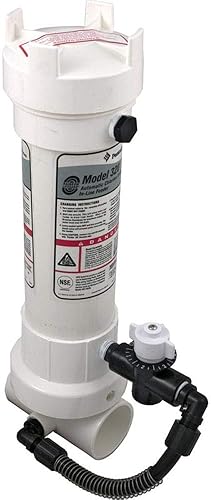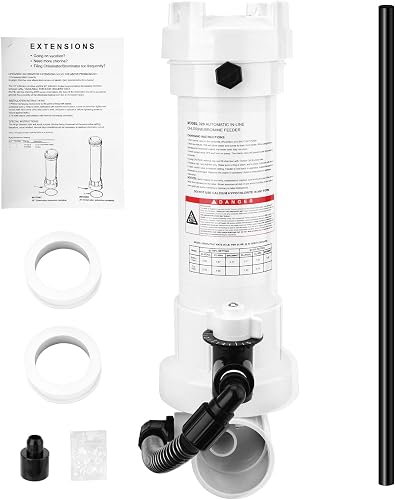
R171096 320 Automatic in-Line Chlorine/Bromine Feeder with Tube & Bushing
Best for: Pool owners looking for a permanent, plumbing-integrated solution for consistent chemical sanitation and deck clearance.
The R171096 320 Automatic in-Line Chlorine/Bromine Feeder represents a foundational approach to pool sanitation for those integrating chemical delivery directly into their plumbing. This in-line system is designed to provide a steady, automated supply of bromine or chlorine, helping to maintain water clarity through consistent chemical distribution throughout the pool.
In-line feeders are favored for their ability to hide the sanitation process within the pool pad equipment, keeping the pool deck clear of floating devices. The R171096 model includes the necessary tube and bushing for installation, though the complexity of the setup depends on existing plumbing configurations. Users should verify that their current pump and filter system can accommodate an in-line feeder before beginning installation. Once properly installed, the system manages chemical erosion based on flow rates, offering a more hands-off experience than floating alternatives. It is a budget-friendly option that focuses on functional, reliable chemical delivery for standard residential pool plumbing setups.
Practical fit
Installing an in-line feeder requires a basic understanding of pool plumbing, as the unit must be plumbed into the return line after the heater or filter. This specific model is designed for direct integration, which offers a clean look and efficient chemical distribution. Buyers should verify the diameter of their existing plumbing pipes to ensure the included tube and bushing will create a secure, leak-free connection. Because it is a permanent installation, owners should consider the accessibility of the unit for future tablet refills and maintenance tasks before finalizing the mounting location on the plumbing manifold.
Tradeoffs and ownership
The main tradeoff with an in-line feeder is the initial effort required for installation and the lack of portability. While it offers a more professional appearance, it lacks the flexibility of a floating unit that can be moved or removed easily. Owners must be diligent about checking the chemical chamber, as the in-line nature makes it less visible than a floating dispenser. Additionally, users should research the specific chemical erosion rates of their tablets to ensure the feeder is calibrated correctly. It is a durable choice, but maintenance involves ensuring the internal components remain free of mineral buildup over time.
Pros
- Integrated in-line plumbing design
- Includes essential installation components
- Budget-friendly equipment option
- Consistent chemical distribution
- Concealed equipment footprint
Cons
- Requires plumbing installation skills
- Less portable than floaters
- Harder to monitor levels
- pool plumbing
- automatic bromine feeder
- in-line installation
- budget friendly